
Space & the cosmos · Specialized
Decay heat powers distant exploration
Plutonium-238 supports peaceful space science by supplying steady decay heat that a radioisotope generator converts into electricity.
THE MATERIAL THAT DOES THE WORK
Chemical form
Space radioisotope systems use plutonium-238 in a plutonium-oxide ceramic fuel. The fuel is formed into heat-source pellets within engineered containment, rather than used as exposed metal.
- 01
Prepare the heat source
Specialized facilities create plutonium-oxide ceramic pellets and incorporate them into engineered fuel containment for a space mission.
- 02
Convert a temperature difference
Thermocouples span the warmer heat source and a cooler heat-rejection path, producing electrical power without a turbine.
- 03
Support the mission
The generator supplies spacecraft systems over long periods, while power and thermal planning match operations to the available output.
Why it works
The releases heat through natural radioactive . Its long and useful heat output allow a compact source to operate for many years, including missions far from strong sunlight. Heat output gradually falls as the isotope decays.
How it is made & used
Specialized facilities prepare the material and manufacture ceramic heat-source pellets. The heat source is integrated with a power-conversion assembly and protective structures, then qualified for the mission.
Inside the application
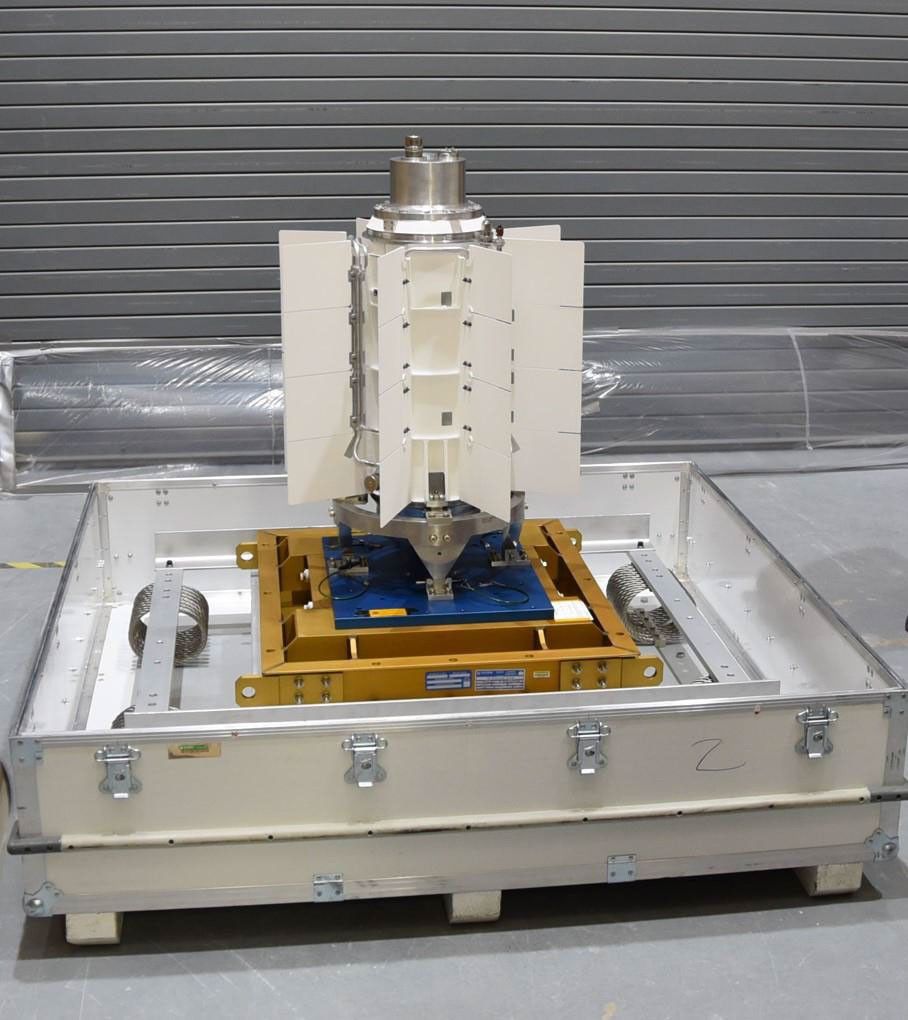
An RTG places a temperature difference across thermocouples: one side receives decay heat while the other rejects heat to its surroundings. This produces limited electrical power for spacecraft electronics and instruments. With no moving parts, the conversion system can support remote operations where routine maintenance is impossible.
Limits & alternatives
Radioactive material requires controlled handling, containment, and mission-specific safety analysis. The ceramic fuel form and multiple protective layers reduce the likelihood and consequences of fuel release during an accident, but cannot eliminate every possible release scenario.
Part of a larger system
Radioisotope systems can supply useful heat as well as electrical power. NASA missions including the Curiosity rover and New Horizons illustrate how this energy source enables scientific observations in challenging environments.
FOLLOW THE EXPLANATION
See the science
Read the half-life account behind declining output ↗
Connect the declining decay heat in the space-power article with the simple parent-population half-life account, while keeping the generator’s electrical conversion as a separate process.
What this connection can show
The destination explains a general half-life account and geological dating limits. Its optional counter uses a hypothetical isotope; it is not parameterized for Pu-238 and predicts neither RTG electrical output nor mission lifetime.
Sources & further reading
- About Plutonium-238 ↗NASA ScienceReference explanation · Source checked
- What is a Radioisotope Power System? ↗U.S. Department of EnergyReference explanation · Source checked
- Safety and Radioisotope Power ↗NASA ScienceReference explanation · Source checked
Sources and further reading. What the review labels mean